Time: 2 pm to 4:30 pm
No. of Attendees: 6
2 pm Devotions: Franciscan Crown Rosary
3 pm Discussion: ‘Caring for Creation’ from ‘Live Like Francis’, Reflection 41
Venue: Greyfriars, 182 Iffley Road, Oxford OX4 1SB
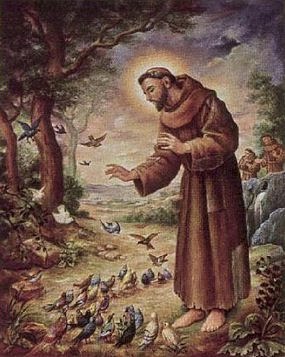
Saint Francis was named the patron saint of ecology in 1989. He saw that all of creation was good. Francis treasured each part of the created world. He believed that all creation was God’s gift and was therefore to be treated as a treasure. In “The Canticle of the Creatures” Francis praises God for all creation. His heart overflowed with gratitude for all God’s gifts. Francis was following Jesus who also treasured creation to such extent that he used creation images as the basis for explaining spiritual truths to those who flocked to him.
Think of your most treasured possession. You consider its meaning using it with reverence, not in ways that might destroy it. Such is the way we are called to reverence all of creation that God has entrusted to us. Oscar Wilde wrote, “Where there is sorrow there is holy ground.” When we view polluted waterways, forests devastated by acid rain or over-logging, abandoned junk piles, air thick with industrial and automotive wastes, and experience a sense of sorrow, that may be the beginning of recreating such areas as “holy ground.” From our observation of the present condition of the earth comes the beginnings of change in how we choose to use God’s precious gift of creation.
Much emphasis is placed in our culture today on possessions. This emphasis is contrary to what Jesus taught. Jesus was so far removed from valuing possessions that he told his followers, “Foxes have holes, and birds of the air have nests, but the Son of Man has nowhere to lay his head” (Matthew 8:20). He did not even value a place to sleep at night. That’s rather extreme, but then Christianity is extreme when weighed against the values of many cultures. Christianity moves us from self to others, from “me” to God. That move is reflected in our buying habits. No matter how little or how much material wealth we have at our disposal, we are called to use God’s wisdom in determining how we spend it. We are not to judge others’ ways but to thoughtfully, prayerfully consider how our habits affect the health of the earth.
The OFS Rule calls Franciscans to “universal kinship” with creation. That says we are all related to the universe and to each other. What is inflicted on the earth also wounds me and my family in some way through the chain of life that links us all. What is healed anywhere on the earth also promotes healing close to home.
From the Rule of the Secular Franciscan Order:
18. Moreover they should respect all creatures, animate and inanimate, which “bear the imprint of the Most High,” and they should strive to move from the temptation of exploiting creation to the Franciscan concept of universal kinship.
Some points discussed:
· The idea of ‘possessions’ is not limited to physical things, relationships for example can included. There is much inspiration from the religious orders, and the Church at large, to avoid personal relationships that might detract from our relationship with God.
· We must give thanks to God for all that is made available for our use and wellbeing. A gift received from anyone is so much more meaningful when there is grateful expression of receipt. It is sometimes said that a good eater is one who gives thanks to the cook – the expression of thanks makes the task of cooking that much more meaningful.
· We all have an interaction with creation – we are part of creation.
· Within the OFS, we are invited to think about issues of involvement with the world and living with orientation shown to us by St. Francis – sharing in God’s creation.
We were reminded that Reflection 41 studied predates Pope Francis’ Encyclical Letter ‘Laudato Si’ – on care for our common home’, published 2015, with worldwide recognition.

 OFS Oxford